Wayfinding Signage: How to Make Your Facility Easier to Navigate
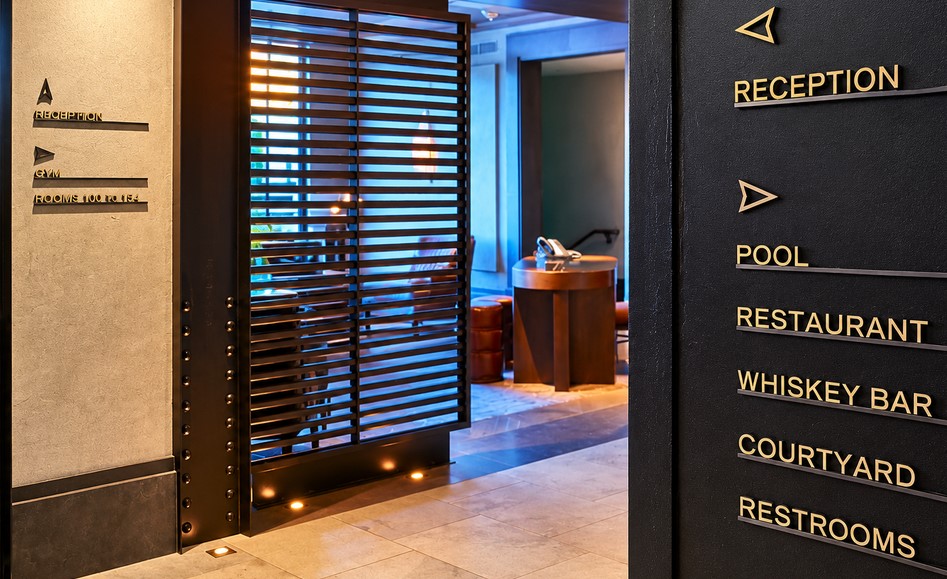
When someone enters your building for the first time, how quickly can they figure out where to go?
For hospitals, medical offices, schools, corporate campuses, commercial properties, and other multi-room facilities, clear navigation is part of the visitor experience. When directional signs are inconsistent, difficult to read, or missing altogether, visitors may become frustrated before they ever reach their destination.
Well-planned wayfinding signage for businesses helps people move through a facility with confidence while reinforcing a more organized, professional environment.
For organizations in Irving and throughout DFW, a thoughtful wayfinding system can reduce confusion, improve traffic flow, and help employees spend less time giving directions.
What Is Wayfinding Signage?
Wayfinding signage is a coordinated system of signs that helps people understand where they are, where they need to go, and how to get there.
It can include:
- Directional signs
- Room identification signs
- Department signs
- Building directories
- Floor and level identification
- Parking and entrance signs
- Restroom signs
- Exit and emergency-related identification
- ADA-compliant room signs
- Maps and directories
The most effective systems work together rather than functioning as a collection of unrelated signs.
A visitor should be able to move from the parking lot to the correct entrance, find a directory, follow directional signs, and identify the final destination without repeatedly stopping to ask for help.
Good Wayfinding Answers Questions Before Visitors Ask
Visitors typically enter an unfamiliar property with a series of questions:
Where do I enter?
Which building or floor do I need?
Which direction should I turn?
How far away is my destination?
Am I still going the right way?
Where is the restroom?
Where do I go when I am finished?
Effective wayfinding anticipates those questions.
That means putting useful information at the points where a visitor actually needs to make a decision. A perfectly designed directional sign does little good if it appears after someone has already passed the hallway they needed.
#SustainableSignmanSays: Good wayfinding answers questions before visitors ask.
Consistency Makes Facilities Easier to Understand
One of the most important elements of wayfinding is consistency.
Visitors learn a sign system as they move through a property. If terminology, colors, arrows, fonts, or placement change from one area to another, that learning process is interrupted.
For example, one sign may direct visitors to “Administration,” another to “Main Office,” and a third to “Administrative Offices” even though all three refer to the same place.
That creates unnecessary uncertainty.
A coordinated wayfinding program should use consistent:
- Department and room names
- Typography
- Colors
- Arrow styles
- Symbols
- Sign sizes
- Mounting locations
- Visual hierarchy
Consistency helps visitors recognize information more quickly and makes the entire facility feel better organized.
Visual Hierarchy Helps People Find the Most Important Information
Not every piece of information on a directional sign deserves equal emphasis.
A visitor approaching an intersection may need to recognize a destination and an arrow in only a few seconds. If every word, symbol, and graphic element receives the same visual weight, the sign becomes harder to process.
Good wayfinding uses visual hierarchy to make the most important information noticeable first.
That may mean:
- Making destination names larger than secondary information
- Using clear directional arrows
- Separating floors, departments, or building sections
- Limiting unnecessary text
- Using contrast to improve readability
- Grouping related destinations together
The goal is not to fit as much information as possible onto each sign. It is to communicate the right information quickly.
Sign Placement Is Just as Important as Sign Design
A wayfinding system can have excellent graphics and still fail if the signs are installed in the wrong places.
Directional signage should generally appear before or at important decision points, such as:
- Building entrances
- Lobby intersections
- Hallway junctions
- Elevator banks
- Stairwells
- Parking-lot entrances and exits
- Changes between departments or building sections
Visitors need enough time to see, understand, and act on the information.
A sign hidden behind a door, mounted too high, blocked by furniture, or positioned beyond an intersection can create more confusion than clarity.
That is why a facility wayfinding assessment should consider the actual path visitors take through the property rather than evaluating individual signs in isolation.
Readability Matters
Directional signs often need to be understood while someone is walking, driving, or looking from across a lobby.
That makes readability critical.
Important considerations include:
Letter size. Text must be large enough for the expected viewing distance.
Contrast. Lettering and backgrounds should provide enough contrast for information to stand out.
Font selection. Highly decorative fonts can be difficult to read quickly.
Spacing. Crowded text and closely packed destinations slow comprehension.
Lighting. Poorly lit corridors or reflective surfaces may affect visibility.
Information quantity. Too much content on one sign can force visitors to stop and study it.
A clean, simple directional sign is often more useful than one overloaded with information.
ADA Requirements Should Be Part of the Planning Process
Some interior identification signs may also need to comply with Americans with Disabilities Act requirements.
Depending on the application, this can involve requirements related to tactile characters, Braille, contrast, character style, mounting height, and sign location.
ADA requirements do not apply to every directional sign in exactly the same way, so businesses should avoid treating accessibility as an afterthought.
A coordinated sign plan can help integrate compliant identification signage with the overall visual system instead of creating a separate set of signs that looks disconnected from the rest of the facility.
Wayfinding Is Especially Important in Healthcare Environments
Healthcare offices and medical facilities are one of the clearest examples of why effective wayfinding matters.
Patients and family members may already be stressed, distracted, or unfamiliar with the building. Complicated navigation adds another unnecessary source of frustration.
Clear signage can help identify:
- Check-in areas
- Departments
- Exam rooms
- Labs
- Imaging areas
- Pharmacies
- Restrooms
- Elevators
- Exits
A well-organized sign system supports a calmer patient experience and can reduce the number of routine directional questions staff members need to answer.
Schools and Campuses Need a System, Not Just Individual Signs
Schools, training centers, campuses, and multi-building properties often grow over time.
New buildings are added. Departments move. Entrances change. Temporary signs become permanent. Eventually, visitors are navigating a mixture of old and new information.
That is a good time to evaluate the property as a complete system.
A wayfinding review can identify:
- Missing directional signs
- Conflicting terminology
- Outdated room names
- Poorly positioned signs
- Inconsistent graphics
- Areas where visitors routinely become confused
Correcting those issues can make an established property much easier to navigate without requiring a complete redesign of the facility itself.
Exterior Wayfinding Starts Before Someone Enters the Building
Wayfinding does not begin at the reception desk.
For many commercial properties, the visitor journey starts from the street or parking lot.
Exterior directional signage may help visitors locate:
- The correct property entrance
- Visitor parking
- Building entrances
- Delivery areas
- Drive-through lanes
- Different buildings or suites
- Accessible parking and entrances
When exterior and interior signs use coordinated terminology and visual elements, visitors experience a smoother transition from arrival to destination.
Wayfinding Signs in Irving, TX
Irving contains office campuses, medical facilities, schools, hospitality properties, multi-tenant developments, and other environments where visitors may need clear directional information.
For these properties, effective wayfinding signs in Irving, TX should be designed around how people actually use the facility.
That starts by understanding:
Where visitors enter.
Which destinations they use most frequently.
Where they must make decisions.
Where confusion currently occurs.
Which signs already exist.
Which terminology should be standardized.
Whether ADA identification signs are needed.
Once those questions are answered, individual signs can become part of a logical system rather than isolated additions to the building.
When Should You Review Your Wayfinding System?
Your property may benefit from a wayfinding review if:
- Visitors frequently ask employees for directions
- Temporary paper signs have become common
- Departments or tenants have moved
- Existing signs use different designs or terminology
- A building has been expanded or remodeled
- Important destinations are difficult to find
- Signs are damaged, faded, or outdated
- Your branding has changed
- Your facility is preparing for increased visitor traffic
Repeated requests for directions are often a useful warning sign. If several visitors are asking the same question, the facility may have a signage problem rather than a visitor problem.
Make Navigation Easier for Everyone
Effective wayfinding should feel almost invisible.
Visitors may not consciously notice that a facility has a good sign system. They simply arrive, follow clear information, and reach their destination without unnecessary confusion.
That is the goal.
Sustainable Signs & Graphics helps businesses and organizations develop wayfinding signage systems in Irving and throughout DFW that improve navigation while supporting a consistent professional image.
If visitors regularly hesitate, turn around, or ask your staff where to go, it may be time to evaluate the signs guiding them.
Contact Sustainable Signs & Graphics to request a facility wayfinding assessment and identify opportunities to make your property easier to navigate. 682-800-5254